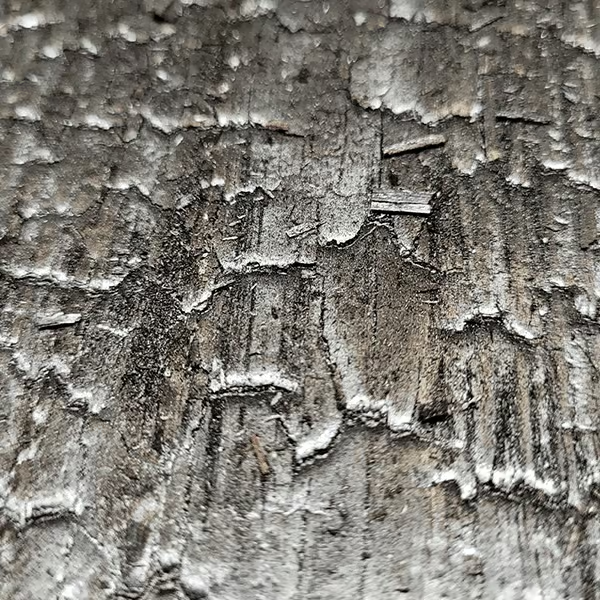
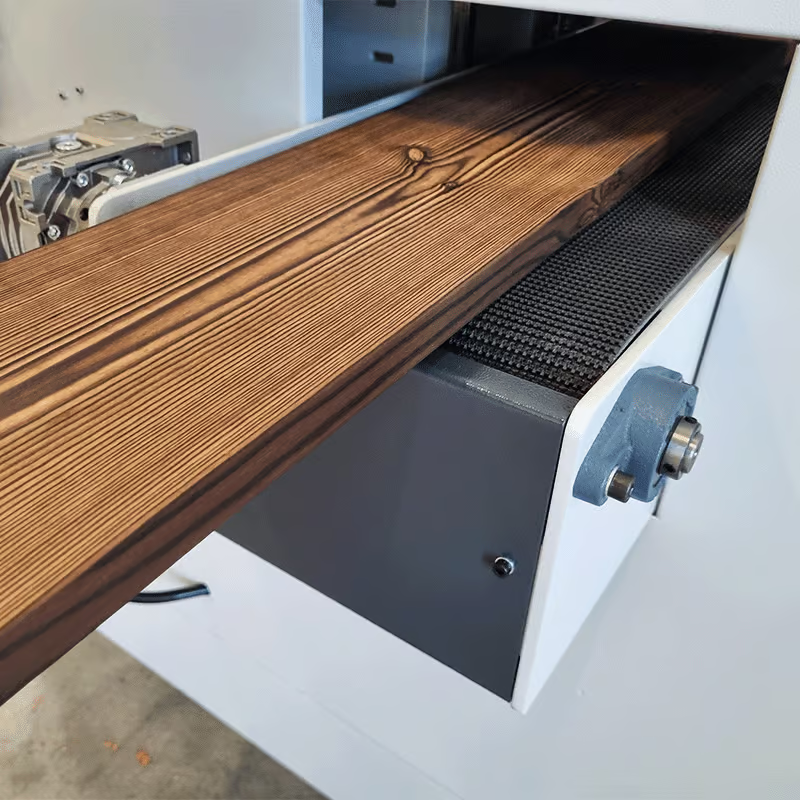
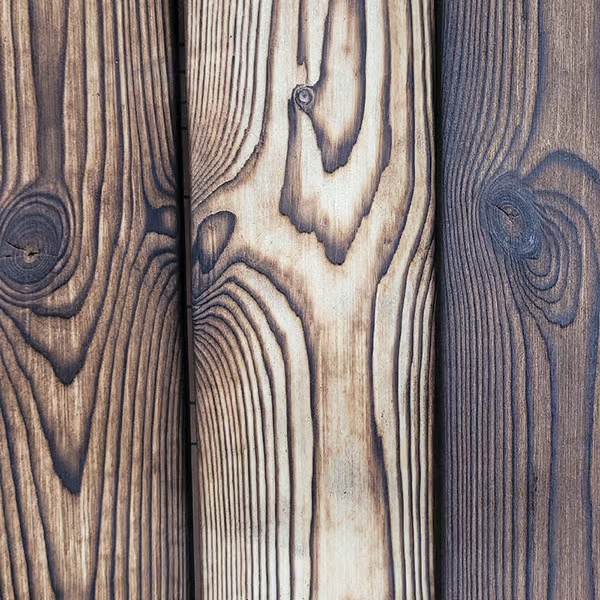
After charring, the challenge is controlling how much of the carbonized layer remains. This case shows how a tailored brushing solution creates a consistent, repeatable Shou Sugi Ban finish across different shapes and dimensions.
The carbonized layer is not only protective, but also determines the look of the finished product. Controlled brushing makes it possible to influence the balance between protection, texture and visual character.
Tynex brushes remove the softer charred material while preserving the harder grain. This creates a strong, natural texture without damaging the wood or losing the character of the Shou Sugi Ban process.
With the right machine setup, brush configuration and adjustable parameters, the final appearance becomes predictable and reproducible, even across different sizes and shapes.
After charring, the key challenge was to control the final appearance of the wood. The carbonized layer protects the material, but it also defines the visual result. Removing too much can affect the protective character, while leaving too much limits the visible wood structure.
Because the wood is treated on all sides, the brushing process also had to work from all directions. The solution needed to be precise, consistent and suitable for different sizes and shapes, including profiles with a radius.
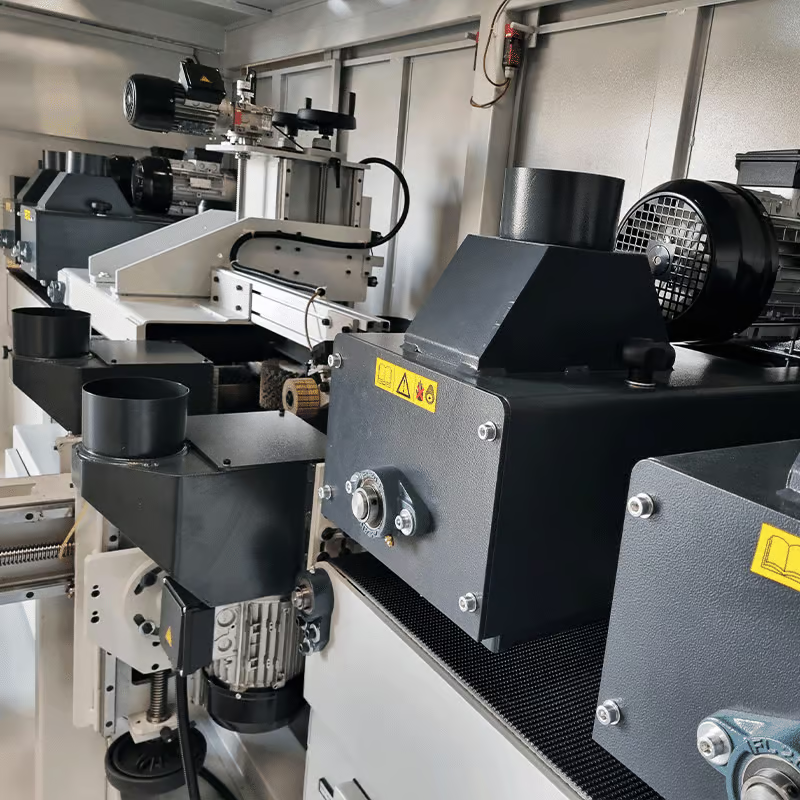
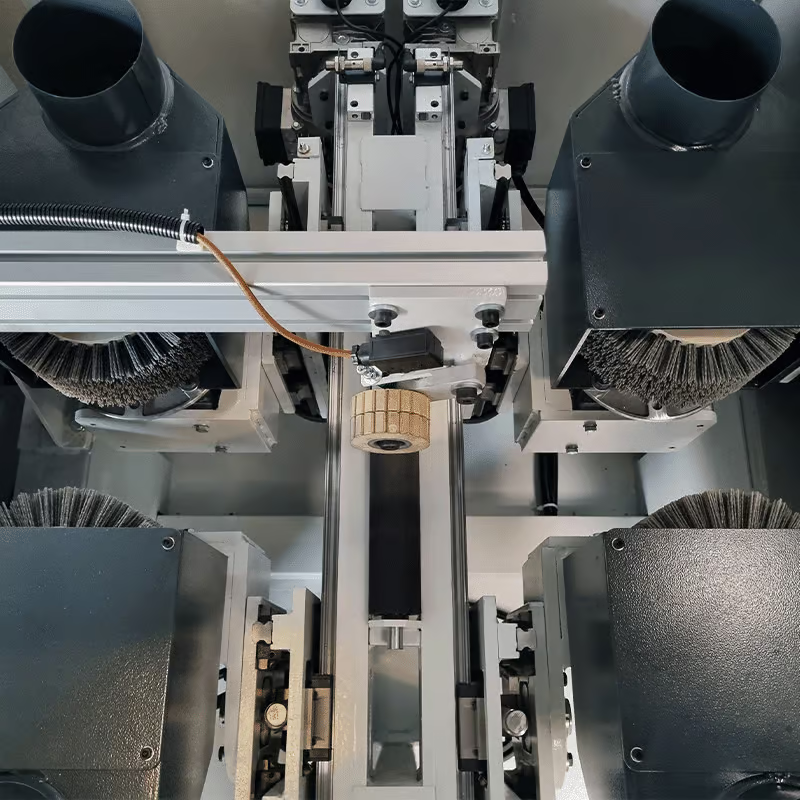
A brushing configuration was developed to process the workpiece from all four sides in a single pass: top, bottom and both sides.
Testing showed that Tynex brushes provided the best result for this application. They are strong enough to remove the charred layer, while still offering the control needed to avoid damaging the wood.
To support different product geometries, the side brushes are adjustable at an angle. Process parameters such as speed, pressure and rotation direction can be adjusted and stored, making the setup flexible and repeatable.
Because the process generates a large amount of carbon residue, the machine was equipped with an extraction system and an air knife at the end of the line. The customer was also advised on the required extraction capacity to keep the surface clean before the next production step.
Finally, the machine was adapted to fit within the available space of the existing production line. Although the solution is modular, it was fully tailored to the customer’s situation.
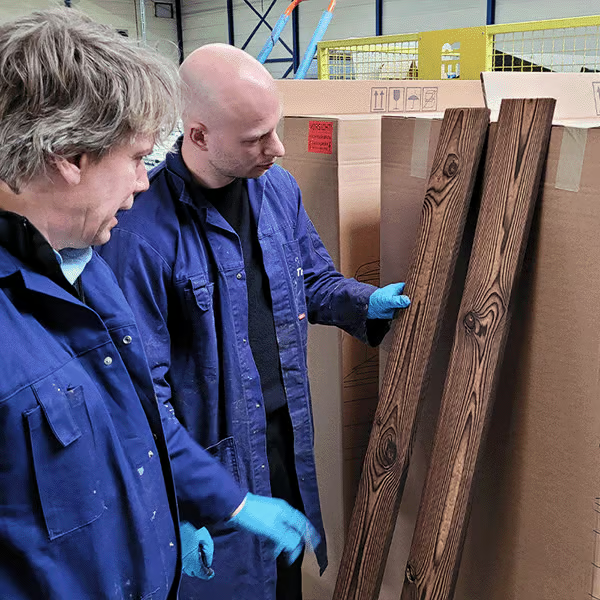
The customer now has full control over both the brushing process and the final appearance of the wood. The result is a strong, consistent grain pattern with the characteristic look of Shou Sugi Ban.
The process is flexible, repeatable and suitable for different dimensions and profiles. Exactly what is needed in an application where detail determines the final result.
Visual overview of the texturing and brushing process within the parquet production environment.
“Before, the result depended too much on manual work. Now we have a process that delivers the same high-quality finish every time, regardless of the product shape.”
Light brushing before oiling ensures even absorption and a consistent, high-end finish on all visible sides.
By integrating brushing and coating into one continuous line, efficiency increases while maintaining full control over surface quality.
Mechanical brushing replaces manual cleaning, increasing capacity while preserving the quality of scaffold planks for reuse.
Explore how different brushing applications handle variability in industrial environments.
Get in touch for questions, advice, or support
Or call us via +31 (0)512 510035.
Trivec communicates primarily in Dutch and English.
Get in touch for questions, advice, or support
Or call us via +31 (0)512 510035.
Trivec communicates primarily in Dutch and English.
Get in touch for questions, advice, or support
Or call us via +31 (0)512 510035.
Trivec communicates primarily in Dutch and English.