Brushing solutions for the wood flooring industry
In wood flooring production, brushing has a direct impact on the final look of the floor.
Inconsistent settings lead to visible differences between boards and batches.
Our brushing solutions for the wood flooring industry
Every wood flooring finishing line is different. Think of wood species, desired texture, and finishing process.
That is why we offer different brushing solutions. By comparing them, you can find the setup that fits your production and the look you want to achieve.
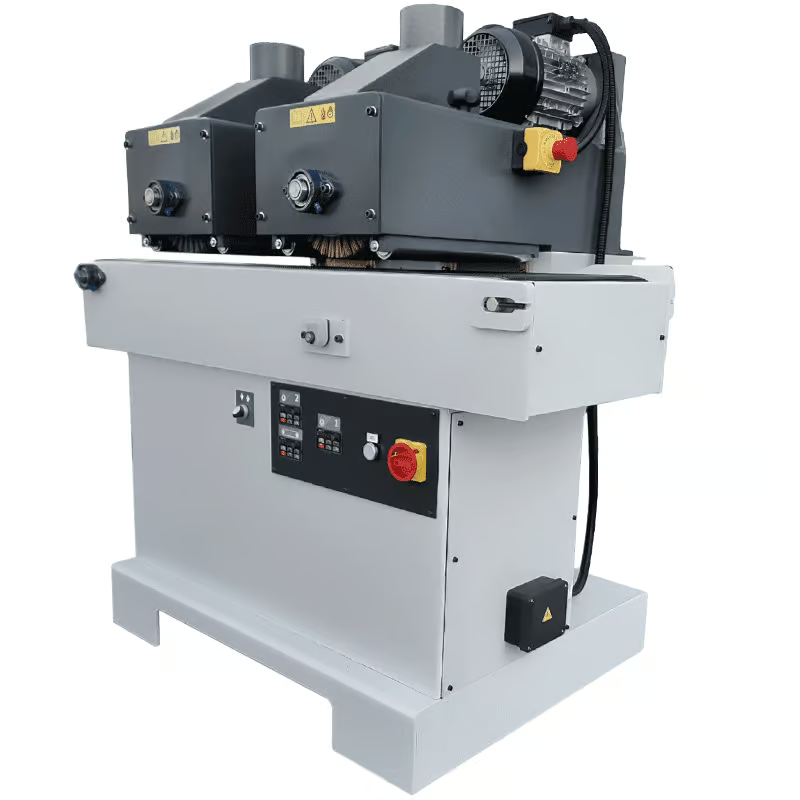
Achieve consistent brushing, structuring and polishing results on wooden surfaces with precise control over the brushing process. Designed for industrial production environments, this machine enhances the visual character and tactile quality of wood while ensuring stable processing and repeatable surface finishes.
The role of brushing in wood flooring production
Brushing is a key step in creating the right surface for wood flooring.
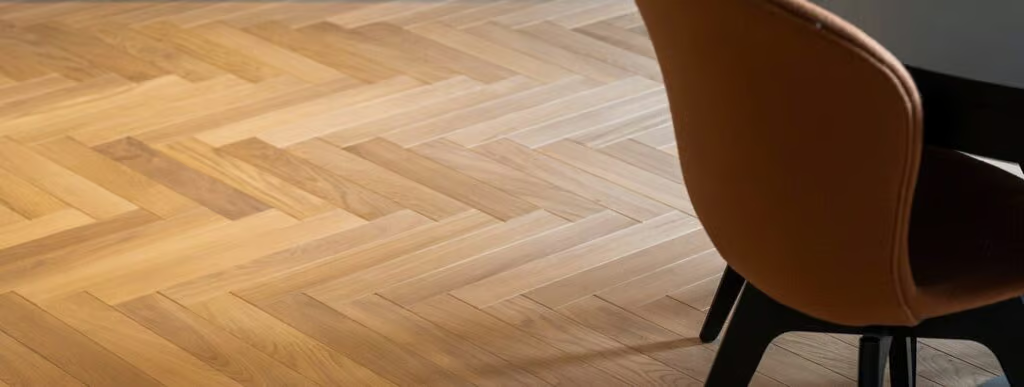
It removes soft fibres, opens the grain, and defines the structure of the wood. This directly influences how the floor looks and how oil, stain, or lacquer behaves.
At the same time, wood is never fully consistent. Differences in density, grain, and moisture are part of the process.
A well-controlled brushing process helps deal with these variations. It creates a stable base so that the appearance and finishing results stay consistent, even when the input material changes.
Common challenges in brushing
In parquet production, small changes in brushing can have a big impact.
Problems
- Not enough control over brushing pressure and speed
- One setup used for different wood species
- Brushing not properly aligned with the finishing process
Challenges
- Keeping the same look across different batches
- Matching brushing with oiling, staining, or lacquering
- Avoiding variation while keeping production speed high
Impact
- Boards that need to be rejected or downgraded
- More waste and rework
- Slower production to maintain quality
Trusted by companies like yours
Companies that faced similar brushing challenges.
![image 15 [Vectorized]](https://trivecbrushing.com/wp-content/uploads/2026/03/image-15-Vectorized-6.png)
![image 15 [Vectorized]](https://trivecbrushing.com/wp-content/uploads/2026/03/image-15-Vectorized-7.png)
![image 15 [Vectorized]](https://trivecbrushing.com/wp-content/uploads/2026/03/image-15-Vectorized-8.png)
![image 15 [Vectorized]](https://trivecbrushing.com/wp-content/uploads/2026/03/image-15-Vectorized-9.png)
![image 15 [Vectorized]](https://trivecbrushing.com/wp-content/uploads/2026/03/image-15-Vectorized-10.png)
![image 15 [Vectorized]](https://trivecbrushing.com/wp-content/uploads/2026/03/image-15-Vectorized-11.png)
Brushing outcomes in wood flooring production
When brushing is set up correctly, the difference is clear.
The surface looks uniform. The structure is consistent. Coatings behave the way you expect.
Even with natural variation in wood, you keep control over the final result. That means less waste, fewer corrections, and a more stable production process.
Related brushing application
Texturing
Texturing is used to level surfaces, remove machining marks, and prepare materials for further finishing or coating. Consistency becomes increasingly challenging as material variation and production speed increase.
View texturing
Sanding
Controlled mechanical brushing used to open wood grain, remove machining residue, and achieve a consistent surface texture across boards and profiles.
View sanding
Check if this applies to your production environment
Every production environment is different. In a short conversation, we help you assess whether your current brushing approach fits your products, volumes, and quality requirements.
Receive industry-specific brushing advice
Review your situation with a brushing specialist
Assess whether this approach fits your industry requirements
Related industries
Wood cladding
Large visible surfaces and outdoor exposure require controlled surface structure and repeatable finishing results.
View wood cladding
Beams
Structural wood elements demand uniform surface treatment across varying dimensions and material characteristics.
View beams
Interior components
Interior applications rely on consistent surface appearance and tactile quality across a wide range of product types.
View interior components
Looking to achieve consistent brushing results in your wood flooring finishing line?
Small variations in material and process can have a big impact on the final look.